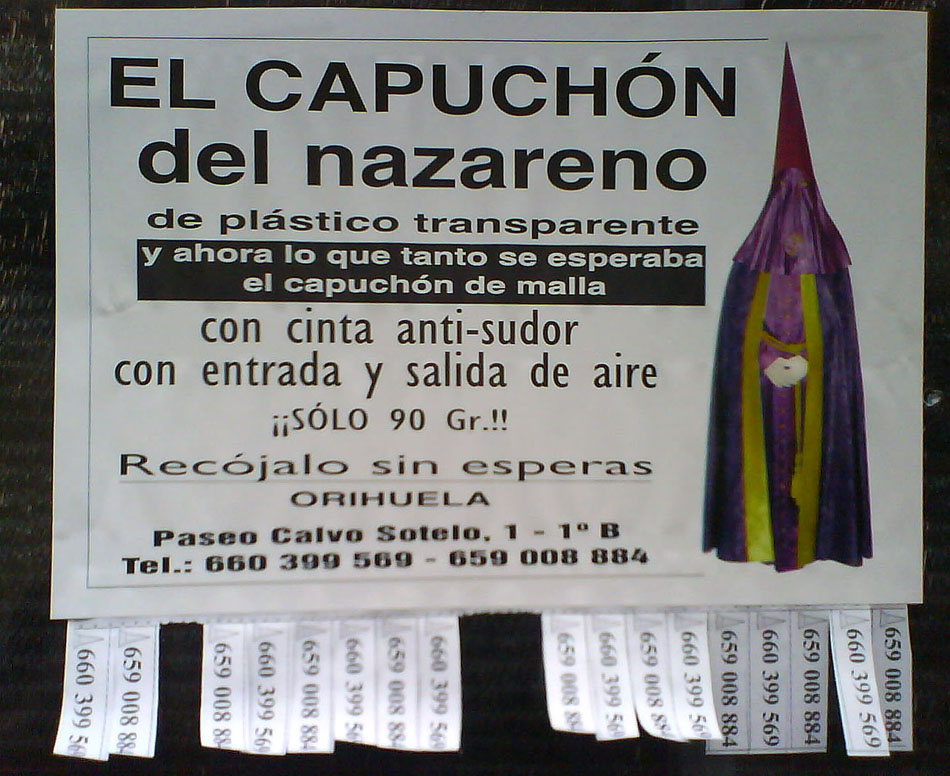
Visto rápido parece una broma tonta pero no lo es. El anuncio está en un muro en construcción del centro de Orihuela. Un avance tecnológico que ya hacia mucha falta a penitentes y costaleros del Levante español. Hay que sobrellevar el cambio climático con pequeños arreglos como este. «Think global, act local.» Todos podemos aportar nuestro ingenio. Adelántense ahora a encargar su capuchón. Llamen cuanto antes. No esperen al último momento.
22 diciembre, 2007
21 diciembre, 2007
Orihuela
Hemos estado en Orihuela gracias a la curiosidad y amabilidad extraordinarias del profesor Jesús Millán. En una entrada anterior comentábamos cómo Jesús Millán nos había dado a conocer el imponente retrato de don Pedro de Santacilia y Pax que está colgado en la escalera principal del Ayuntamiento de Orihuela. Aquel contacto azaroso entre nosotros se convirtió en diálogo y fuimos allí a hablar de la figura de don Pedro, dentro del contexto del siglo XVII en Mallorca, así como del proyecto de edición del epistolario que estamos llevando a cabo.
Jesús Millán es un oriolano de raíz que se sabe la historia de cada guijarro de la ciudad, y fue un descubrimiento continuo dar un paseo con él por sus calles. Lamentamos juntos la explosión de urbanismo irrespetuoso, común a todo el levante español en estos últimos años, y nos desesperamos ante la casita abandonada donde nació Miguel Hernández, con la puerta tumbada como de una coz y los batientes de su única ventana desencuadernados. Una placa casi ilegible por la mugre recuerda dónde estamos. No teníamos la cámara de fotos y a aquella hora estaba casi oscuro. La prueba con la cámara del móvil fue un desastre. A la mañana siguiente, ya con la luz del día, volvimos a probar en un rápido paseo antes de partir de vuelta (sin poder volver a la casa de Miguel Hernández). Aquí tenéis unas imágenes. Perdonad la calidad pero valen como modesto registro de la visita.
También nos ha gustado mucho esta web de los amigos de Orihuela.
08 noviembre, 2007
Studia aurea
Ha nacido una nueva revista dedicada a la literatura y la teoría literaria del Renacimiento y el Siglo de Oro: Studia Aurea. Hemos colaborado en su alumbramiento formando parte del Consejo de Redacción y publicando un estudio: «Imago veritatis: la circulación de la imagen simbólica entre fábula y emblema». Ved los abstracts en español e inglés, por si os interesa ir a leerlo:
Desde su nacimiento, derivado directamente de determinadas prácticas editoriales, el libro de emblemas entra en estrecha comunicación con otros impresos ilustrados. Uno de ellos es el libro de fábulas. Este estudio rastrea los presupuestos teóricos de la relación entre la fábula y la imagen simbólica para entender mejor las causas de su progresiva aproximación a la serie emblemática. En un segundo paso se centra en la teorización específicamente barroca sobre la imagen simbólica, atendiendo de manera privilegiada a los textos jesuíticos, tan centrales en este conjunto de ideas. La investigación concluye observando un ejemplo concreto de interinfluencias entre una fábula (la del águila y el escarabajo) y algunas de sus representaciones emblemáticas.
The emblem book, from its very inception and deriving directly from certain editorial practices, is closely related to other illustrated book traditions. One of these is the fable book. This study examines the theoretical premises of the relationship between the fable and the symbolic image in order to understand better the causes of their progressive similarity to emblematic illustration. A secondary focus of this study centers on the specifically Baroque theorizing on the symbolic image, with Jesuit texts given a privileged consideration, since they are so central to this nexus of ideas. The study concludes with an analysis of a concrete example of the mutual influences between one fable (that of the eagle and the beetle) and some of its emblematic representations.
22 octubre, 2007
Melancolía
«Medio Maravedí» sigue aumentando de manera constante su lista de títulos. Ahora es Fernando R. de la Flor quien firma aquí su nueva indagación en las raíces del Barroco hispano. Estamos orgullosos de ver que nuestra colección de textos y estudios del Siglo de Oro acoge estas páginas llenas, como siempre en la prosa de Fernando R. de la Flor, de pasión, vehemencia, brillantez y datos precisos. Os sugerimos que os acerquéis un momento a ver una descripción más completa y leer un capítulo de esta Era melancólica. Figuras del imaginario barroco.
15 octubre, 2007
Con agua de las fuentes persas
Firdusi (Hakīm Abul-Qāsim Firdawsī Tūsī. Tus, 935 - c. 1020), el poeta persa autor de la inmensa epopeya Shah-Nameh (Libro de los reyes), era un hombre orgulloso como bien consciente de la calidad de sus versos. Las intrigas en el palacio del sultán Maḥmūd-e Ghaznawī le acabaron conduciendo a una vejez pobre y retirada en su pueblo natal. Pero antes de abandonar la corte Firdusi utilizó su única arma, la palabra, para hacer correr entre el pueblo un retrato destructivo del sultán, otrora su mecenas. En sus tres últimos versos, la sátira revela esa idea de la poesía como arma poderosa (que luego Horacio la hará más resistente que el bronce: «aere perennius», Odas, III, 30.1). Dice Firdusi:
¿Por qué con tu conducta mi mordaz
ingenio has irritado? ¿No te espanta
esta sangrienta espada de mi genio?
La sátira acusa al sultán de una ruindad esencial, innata, incorregible. La hace remontar a sus orígenes familiares y alcanzar después lo categórico en una serie de comparaciones que prueban cómo nadie escapa a lo que es. Entre estas comparaciones encontramos dos de abundante presencia en la literatura. Primero aparece la víbora, que aunque se la críe con todo regalo y cariño acabará mordiendo a su benefactor: «De la nada elevar a los malvados [...] es como víboras criar en nuestro pecho»:
Si coges una víbora del campo
y en un lecho de rosas la acomodas,
y en todo cuanto quiera la complaces,
y agua inmortal le das como bebida,
no lograrás que amiga tuya sea,
y al fin te escupirá mortal veneno.
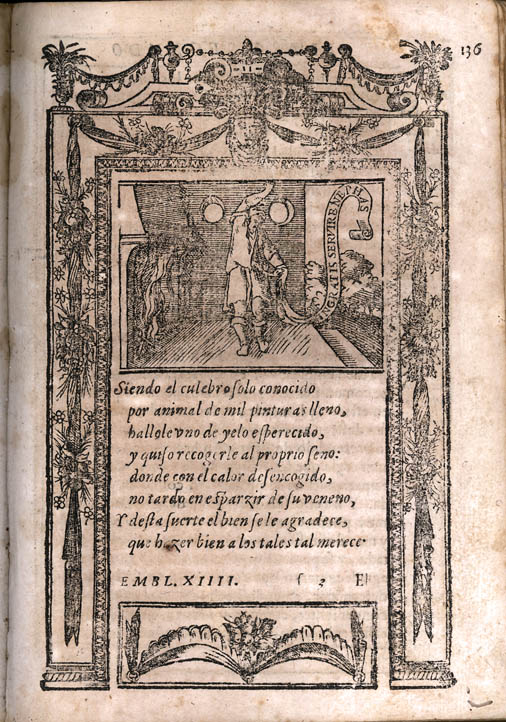
Es decir, el castizo «cría cuervos...». Nuestros libros de emblemas españoles usan este apólogo. Lo podemos ver en los Emblemas morales de Juan de Horozco («Ingratis servire nephas», II.14, f. 136r).

La otra comparación de la maldad intrínseca al sultán es esta, que ha de sonar a cualquier lector ocasional de libros de emblemas:
Pero no es maravilla que los pechos
de los malos engendren la maldad.
Forzoso es que la noche oscura sea;
absurdo es esperar sea bueno el malo.
Y por más que se lave el etíope,
jamás podrá mostrar un blanco rostro.
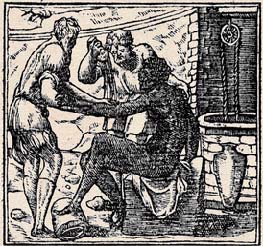
En efecto, fue el mismo Alciato quien echó mano de este tópico tan presente, también, en la literatura árabe desde que Lokman, el Esopo árabe (c. 1100 a. C.), le dedicó una de sus fábulas.
IMPOSIBLE (Emblema 59)
Por qué lavas el negro en vano? deja
de querer aclarar la noche escura,
Que ansí el proverbio viejo lo aconseja.
(traducción de Bernardino Daza en la edición española de Lyon, 1549)
Para la traducción española de los textos de Firdusi hemos utilizado la Antología de poetas persas de Rafael Cansinos Assens: estos días la hemos estado leyendo llenos de curiosidad por las preferencias lingüísticas del incansable traductor.
Nuestra nota sirve para demostrar, en este caso desde la literatura persa, cómo los libros de emblemas europeos de los siglos XVI y XVII fueron una fenomenal caja de resonancias literarias universales.
27 agosto, 2007
Un regalo para Bandi
Hemos conocido el odio cordial de nuestro amigo Bandi a los gatos. Le brindamos una manera de empezar a amarlos descubriendo en ellos alguna utilidad. El texto está sacado de la recopilación de Rupert de Nola (cocinero del rey Fernando I de Nápoles –1458-1494–, hijo de Alfonso el Magnánimo), Lybre de doctrina per a ben servir. De tallar e del art de coch (Libro de doctrina para bien servir. De trinchar y del arte de cocinero), Barcelona: Carles Amorós, 1520.
De menjar de gat rostitLo gat pendras e mataras ço es degollar lo: e quant sia mort leua li lo cap e guarda q[ue] nengu non me[n]jas p[er] la vida: car p[er] ventura tornaria orat: e apres scorxal be e netame[n]t e obrel e fes lo ben net: e quant sie net pren lo e met lo dins en vn drap de li q[ue] sie net e soterral deual terra de manera q[ue] stiga vn jorn e vna nit: e apres trau lo de alli e met lo en ast e vaja al foch a coure: e apres quant coura vntal ab bon all e oli e qua[n]t sia vntat bat lo be ab vna verga e aço faras fins q[ue] sia cuyt vntant y batent: e quant sia cuyt pendras lo e tallaras: axi com si fos vn conill e met lo en vn plat gran e pren del all e oli que sia destemprat ab bon brou de manera q[ue] sia ben clar e lançal damu[n]t lo gat: e apres menja d[e]ll e veuras vna via[n]da singular.
De comida de gato asadoEl gato tomarás y matarás, es decir, lo degollarás. Y cuando esté muerto quítale la cabeza y vigila que nadie la coma ni por su vida, porque quizá podría volverse loco. Y después desuéllalo bien y limpiamente, y ábrelo y límpialo bien. Y cuando esté bien limpio ponlo en un trapo de lino que esté limpio y mételo bajo tierra de manera que esté un día y una noche. Y después sácalo de allí y ponlo en un espetón y que vaya al fuego a asarse. Y luego mientras se asa úntalo con buen alioli [ajiaceite], y cuando esté untado golpéalo con una vara, y esto harás hasta que esté asado, untando y golpeando. Y cuando esté asado lo tomarás y trincharás así como si fuera un conejo. Y ponlo en un plato grande y toma el alioli desleído en un buen caldo de manera que sea bien claro y échalo encima del gato. Y después come de él. Verás una vianda singular.
Bandi es un extraordinario sumiller, así que no tendrá problema en encontrar el vino que mejor case. ¡Salud y que aproveche!
24 agosto, 2007
Johann Kreihing rinde homenaje a Saavedra Fajardo
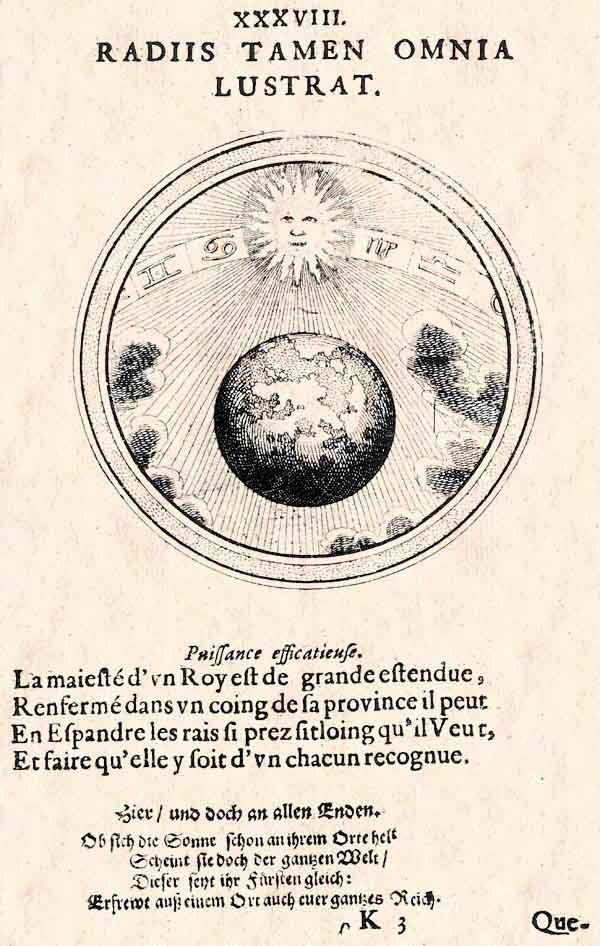
El uso simbólico del sol para representar al rey, cargado de una clara —a veces también recóndita— intención ideológica, es abrumador en la iconografía monárquica de los siglos XVI, XVII y XVIII, en especial entre habsburgos y borbones. Para ver su recorrido emblemático basta hojear la sección «Makrokosmos» del Emblemata. Handbuch zur Sinnbildkunst des XVI und XVII Jahrunderts, de Henkel – Schöne (Stuttgart, 1967, 5-50), consultar nuestra Enciclopedia de emblemas españoles ilustrados (Madrid: Akal, 1999) o leer el excelente estudio de Víctor Mínguez, Los reyes solares. Iconografía astral de la monarquía hispánica (Castelló: Universitat Jaume I, 2001).
Uno de los conceptos que discuten los emblemistas políticos es la conveniencia de que el rey
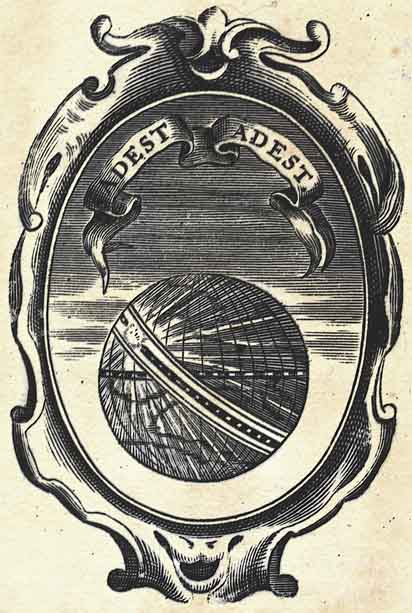
viaje por sus dominios, tanto para acercarse a los problemas como para que sus súbditos le sientan próximo. Así, el sol que cruza el cielo regalando luz y disipando las sombras proporciona una imagen obvia. El primer libro de emblemas español en que la encontramos es el de Saavedra Fajardo (Idea de un príncipe político cristiano, LXXXVI), con el mote Rebus adest (damos el grabado de la edición en francés de París, 1668, en el que puede observarse una curiosa errata del grabador).
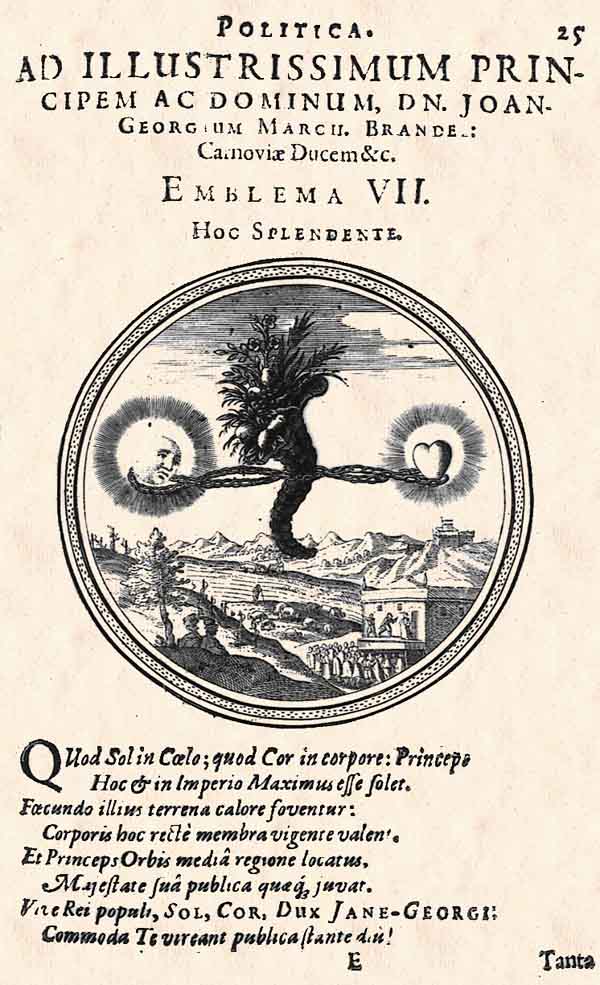
Saavedra pudo inspirarse en el emblema VII de Jacobus a Bruck-Angermundt, Emblemata politica (Argentina: Jacobus ab Heyden / Colonia: Abraham Hogenberg, 1618), aunque no parece claro (ver abajo a la derecha).

Quizá sea una fuente más próxima este otro emblema (abajo), el 38 de Julius Zincgref, Emblematum ethico-politicorum centuria (1ª ed. 1591, pero usamos Heidelberg: Clemente Ammonius, 1666). Luego, Picinelli comentó la empresa de Saavedra en su famoso Mundus simbolicus (ver ahora la traducción al español de Eloy Gómez Bravo y Bárbara Skinfill en El Colegio de Michoacán). No son estos los motivos de esta nota.

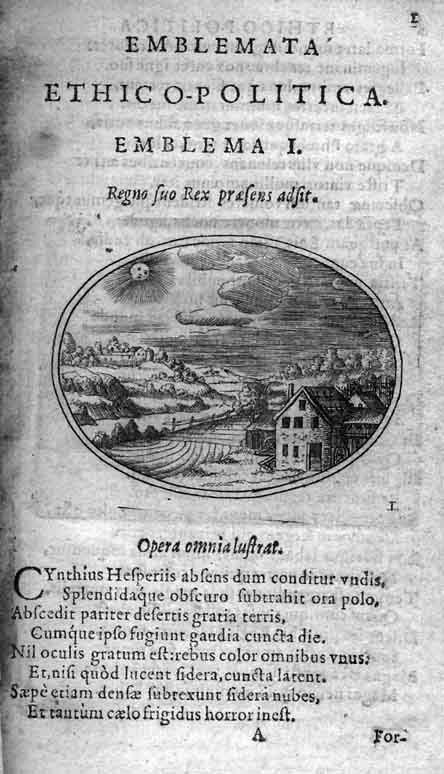
Lo que sí nos parece claro es que el jesuita Johann Kreihing, en un libro de contenido político posterior al de Saavedra, Emblemata ethico-politica (Amberes: Jacobus Meirisius, 1661) siguió de cerca al español para un emblema de tema idéntico. Se trata, además, del primer emblema de la colección y hay una curiosa coincidencia que puede leerse como homenaje implícito de Kreihing a Saavedra
(la imagen, a la derecha, está tomada de la ed. facs. de G. Richard Dimler, Turnhout: Brepols, 1999): Kreihing dedica su libro, con profundas y extensas expresiones de afecto y admiración en los preliminares, a Leopoldo Guillermo de Austria, personaje que solo aparece una vez en el libro de Saavedra, justamente en ese emblema. Cuando menos, nos llama la atención que el libro de Kreihing, dedicado con profusión y vehemencia a Leopoldo Guillermo, se abra con la imitación del único emblema de Saavedra Fajardo que habla del personaje.
El archiduque Leopoldo Guillermo de Austria (1614-1662) era el sobrino mayor de Felipe IV; tomó parte en algunas batallas de la Guerra de los Treinta Años (1639, 1641 y 1645-56) y fue durante casi un decenio (1647-1656) gobernador de los Países Bajos donde apoyó y favoreció en cuanto pudo a la Compañía de Jesús. Así lo introduce Saavedra en su texto:
Saavedra pudo inspirarse en el emblema VII de Jacobus a Bruck-Angermundt, Emblemata politica (Argentina: Jacobus ab Heyden / Colonia: Abraham Hogenberg, 1618), aunque no parece claro (ver abajo a la derecha).
Quizá sea una fuente más próxima este otro emblema (abajo), el 38 de Julius Zincgref, Emblematum ethico-politicorum centuria (1ª ed. 1591, pero usamos Heidelberg: Clemente Ammonius, 1666). Luego, Picinelli comentó la empresa de Saavedra en su famoso Mundus simbolicus (ver ahora la traducción al español de Eloy Gómez Bravo y Bárbara Skinfill en El Colegio de Michoacán). No son estos los motivos de esta nota.
Lo que sí nos parece claro es que el jesuita Johann Kreihing, en un libro de contenido político posterior al de Saavedra, Emblemata ethico-politica (Amberes: Jacobus Meirisius, 1661) siguió de cerca al español para un emblema de tema idéntico. Se trata, además, del primer emblema de la colección y hay una curiosa coincidencia que puede leerse como homenaje implícito de Kreihing a Saavedra
El archiduque Leopoldo Guillermo de Austria (1614-1662) era el sobrino mayor de Felipe IV; tomó parte en algunas batallas de la Guerra de los Treinta Años (1639, 1641 y 1645-56) y fue durante casi un decenio (1647-1656) gobernador de los Países Bajos donde apoyó y favoreció en cuanto pudo a la Compañía de Jesús. Así lo introduce Saavedra en su texto:
Mas prudente, i valeroso se muestra en la ocasion presente el Señor Archiduque Leopoldo, que aunque se vè en Salefelt acometido de todas las fuerzas juntas de los enemigos mui superiores a las suyas, desprecia los peligros de su persona, i se mantiene con generosa constancia, conociendo que en aquel suceso consiste la salud del Imperio, y de la Augustisima Casa de Austria: siendo el primero en los peligros, i en las fatigas militares. (Idea de un príncipe... Milán, 1642, p. 647).Entre 1639 y 1640 Leopoldo Guillermo consiguió batir en retirada a los suecos que ocupaban Bohemia, llevándolos hasta el río Weser. Por nuestra parte, nosotros acabamos de volver de Bohemia y aún estamos digiriendo el festín de imágenes, informaciones, paisajes, historia de aquella zona... Pero esto es harina de otro costal.
22 agosto, 2007
Attila
It would be a guaranteed dropout question in any quiz: where does a statue of Attila the Hun stand today? One could only guess: in Transylvania? In ancient Upper Hungary? In Sopron? In Óbuda? In Mongolia? On the battlefield of Catalaunum? In China, in the former capital of the Huns?
The correct answer is: twenty kilometers from Vienna, in the tiny Austrian town of Tulln.
Nowadays the late descendants of the Huns only make expeditions to the Praskac of Tulln, the richest nursery of Kukania for English roses and other Western treasures unknown in Hunland. Ancient Huns, however, used to come here for quite different flowers.
According to the Nibelung Epic, Attila, the king of the Huns received here his bride Kriemhild coming by boat from Passau:
ein stat bi tvonowe / lit in osterlant
div ist geheizen tvln / da wart ir bechant
vil manich site vremede / den si e nie gesach
si enpfiengen da genvge / den sit leit von ir gesach
vor eceln dem chvenege / ein ingesinde reit
vro vnd vil riche / hoefsh vnt gemeit
wol vier vnd zweinzech fversten / tiwer vnd her
daz si ir vrowen saehen / davon en gerten si niht mer
zwene fvrsten riche / als vns daz ist geseit
bi der frvn gende / trvgn iriv chleit
da ir der chvenich ecel / hin engegen gie
da si den fvrsten edele / mit chvsse gvetelich enpfie
A city by the Danube / in Osterland doth stand,
Hight the same is Tulna: / of many a distant land
Saw Kriemhild there the customs, / ne’er yet to her were known.
To many there did greet her / sorrow befell through her anon.
Before the monarch Etzel / rode a company
Of merry men and mighty, / courteous and fair to see,
Good four-and-twenty chieftains, / mighty men and bold.
Naught else was their desire / save but their mistress to behold.
As is to us related, / did there high princes twain
By the lady walking / bear aloft her train,
As the royal Etzel / went forward her to meet,
And she the noble monarch / with kiss in kindly wise did greet.
Such a historical chance cannot be missed by a small Austrian town of ten thousand inhabitants. Although Tulln has just recently (2001) erected a statue – a copy of the equestrian statue in the Capitolium – to Marcus Aurelius – “in order it might recall the memory of several centuries of Roman presence at the banks of the Danube” –, as well as to the great son of the town Egon Schiele (2000) – whose memory until then was only recalled by the town prison, where he condescended to serve his sentence, and which was then transformed into a Schiele Museum with open air beer pub and a gorgeous vista on the Danube – but having been mentioned in the Nibelungenlied is a whole other story!
The town has therefore given commission to the Russian sculptor Mihail Nogin – who happens to have been the creator of the previous two statues as well – to erect a monument, in the form of a sculptural group on the presumptive site of that historical encounter, the desolate bank of the Danube behind the monastery of the Minorites, to the marching in of Tulln into German epic poetry. With this “Projekt” – as Landeshauptmannstellvertreter Ernest Gabmann formulated it with untranslatable German perfection – “wurde ein wertvoller städtebaulicher Akzent gesetzt”, and furthermore – a hardly negligible point of view – “wurden rund 160 Parkplätze in der Innenstadt von Tulln geschaffen, wodurch das Zentrum attraktiviert und eine Erhöhung der Kundenfrequenz erreicht werden soll”.

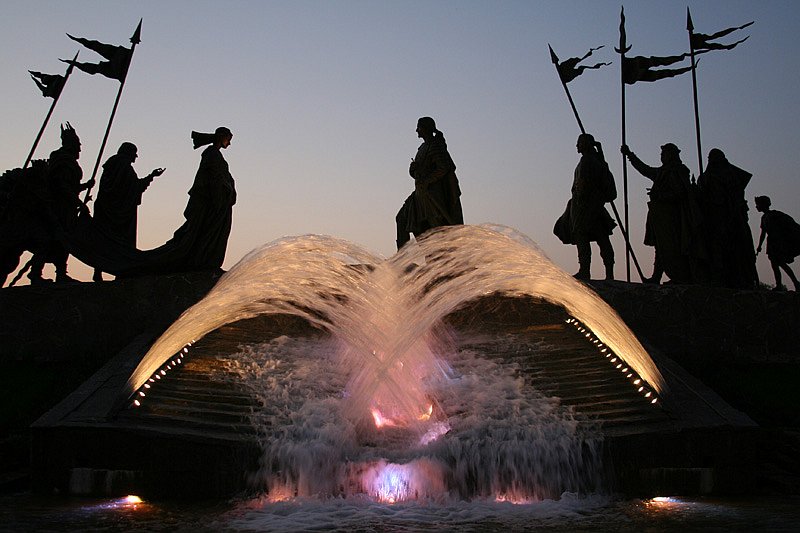
The statue unveiled in 2005 which, instead of being trivially mentioned as a “Denkmal” – Österreich ist anders! – is called a “Bronzeskulpturen-Dokumentation,” consists of three parts. In the forefront one can read the verses of the Nibelung Epic about Tulln freshly written on the open page of a large bronze book placed on a rustic slab – the quill of the bronze goose is still laying on the bronze page. Behind the book, the jets of water of the fountain shaped by “Wasserbildhauer” (haben Sie’s mal probiert, Wasser zu hauen?) Hans Muhr, repeat on a larger scale the double arch of the open book, subliming it into an unmaterial and timeless metaphor as if it were, while from behind the vapour of the water, like from the mist of the past, the historical vision emerges. A straight talk. The citizen looks at it and says: “I got it. That one there comes out of this one here, as if it were. Art, isn’t it.” And thus having succesfully absolved the component “art” of his duty, with peaceful heart he goes on to behold the history.
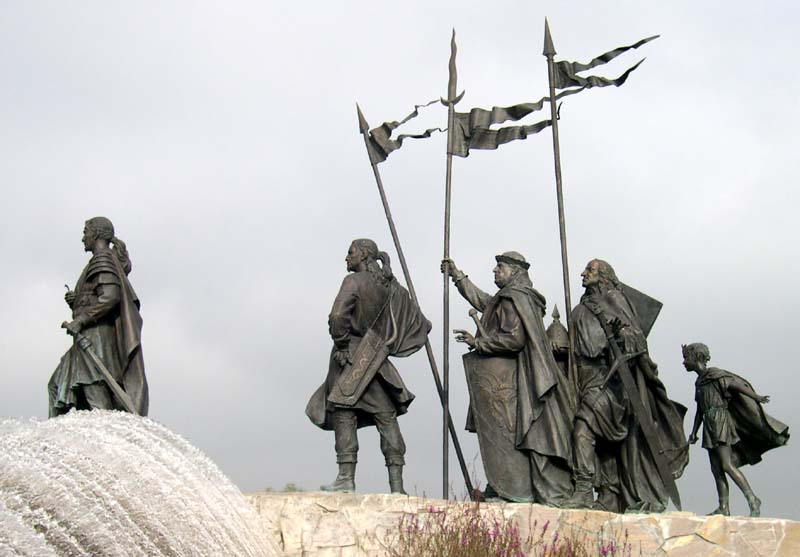
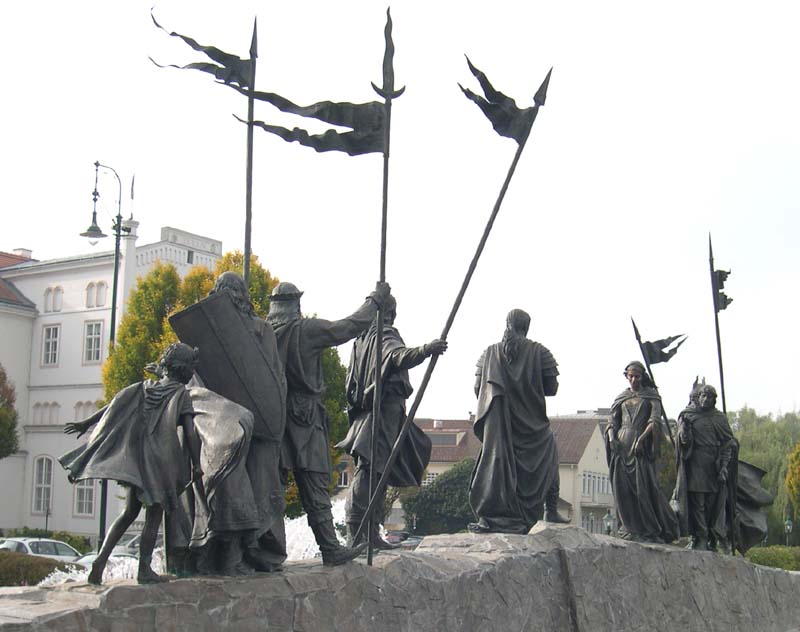
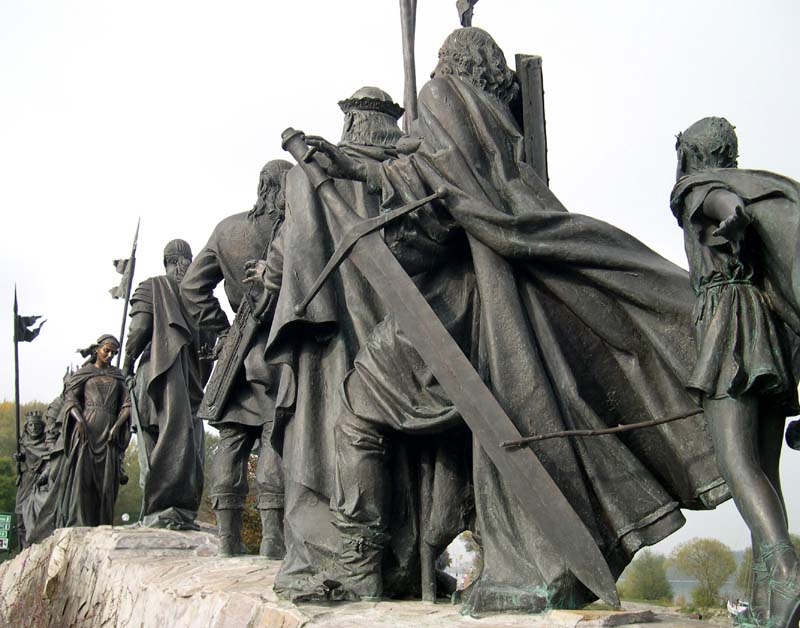
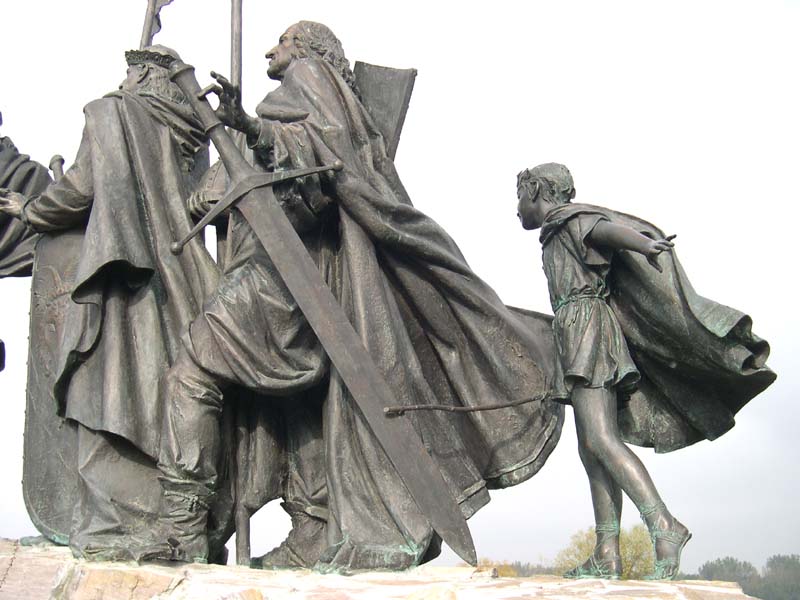
Kriemhild, coming from the left, from the direction of Passau is accompanied by the Markgraf of Osterland – today’s Austria – Rüdiger von Bechelaren and by the other “high princes twain” mentioned in the epic, to Attila waiting for her on the right side, in the direction of Hunnia. Behind the Hun king there stands his brother Buda, as well as two German princes living in exile in the Hun court, Dietrich von Bern and Gibich. The queue is ended by the little child of Attila, Csaba – according to the inscription he is Aladár, but this latter will be actually the son of Kriemhild – swinging his wooden sword and peeping curiously from behind the cloak of Gibich at his future stepmother.


Finally, behind Csaba – rigorously from the direction of Hunnia – a shocked bronze rat is watching the never seen multitude.


The correct answer is: twenty kilometers from Vienna, in the tiny Austrian town of Tulln.
Nowadays the late descendants of the Huns only make expeditions to the Praskac of Tulln, the richest nursery of Kukania for English roses and other Western treasures unknown in Hunland. Ancient Huns, however, used to come here for quite different flowers.
According to the Nibelung Epic, Attila, the king of the Huns received here his bride Kriemhild coming by boat from Passau:
div ist geheizen tvln / da wart ir bechant
vil manich site vremede / den si e nie gesach
si enpfiengen da genvge / den sit leit von ir gesach
vor eceln dem chvenege / ein ingesinde reit
vro vnd vil riche / hoefsh vnt gemeit
wol vier vnd zweinzech fversten / tiwer vnd her
daz si ir vrowen saehen / davon en gerten si niht mer
zwene fvrsten riche / als vns daz ist geseit
bi der frvn gende / trvgn iriv chleit
da ir der chvenich ecel / hin engegen gie
da si den fvrsten edele / mit chvsse gvetelich enpfie
A city by the Danube / in Osterland doth stand,
Hight the same is Tulna: / of many a distant land
Saw Kriemhild there the customs, / ne’er yet to her were known.
To many there did greet her / sorrow befell through her anon.
Before the monarch Etzel / rode a company
Of merry men and mighty, / courteous and fair to see,
Good four-and-twenty chieftains, / mighty men and bold.
Naught else was their desire / save but their mistress to behold.
As is to us related, / did there high princes twain
By the lady walking / bear aloft her train,
As the royal Etzel / went forward her to meet,
And she the noble monarch / with kiss in kindly wise did greet.
Such a historical chance cannot be missed by a small Austrian town of ten thousand inhabitants. Although Tulln has just recently (2001) erected a statue – a copy of the equestrian statue in the Capitolium – to Marcus Aurelius – “in order it might recall the memory of several centuries of Roman presence at the banks of the Danube” –, as well as to the great son of the town Egon Schiele (2000) – whose memory until then was only recalled by the town prison, where he condescended to serve his sentence, and which was then transformed into a Schiele Museum with open air beer pub and a gorgeous vista on the Danube – but having been mentioned in the Nibelungenlied is a whole other story!
The town has therefore given commission to the Russian sculptor Mihail Nogin – who happens to have been the creator of the previous two statues as well – to erect a monument, in the form of a sculptural group on the presumptive site of that historical encounter, the desolate bank of the Danube behind the monastery of the Minorites, to the marching in of Tulln into German epic poetry. With this “Projekt” – as Landeshauptmannstellvertreter Ernest Gabmann formulated it with untranslatable German perfection – “wurde ein wertvoller städtebaulicher Akzent gesetzt”, and furthermore – a hardly negligible point of view – “wurden rund 160 Parkplätze in der Innenstadt von Tulln geschaffen, wodurch das Zentrum attraktiviert und eine Erhöhung der Kundenfrequenz erreicht werden soll”.
The statue unveiled in 2005 which, instead of being trivially mentioned as a “Denkmal” – Österreich ist anders! – is called a “Bronzeskulpturen-Dokumentation,” consists of three parts. In the forefront one can read the verses of the Nibelung Epic about Tulln freshly written on the open page of a large bronze book placed on a rustic slab – the quill of the bronze goose is still laying on the bronze page. Behind the book, the jets of water of the fountain shaped by “Wasserbildhauer” (haben Sie’s mal probiert, Wasser zu hauen?) Hans Muhr, repeat on a larger scale the double arch of the open book, subliming it into an unmaterial and timeless metaphor as if it were, while from behind the vapour of the water, like from the mist of the past, the historical vision emerges. A straight talk. The citizen looks at it and says: “I got it. That one there comes out of this one here, as if it were. Art, isn’t it.” And thus having succesfully absolved the component “art” of his duty, with peaceful heart he goes on to behold the history.
A Rezeptions-Dokumentation of the Bronzeskulpturen-Dokumentation
from digicamfotos.de
Kriemhild, coming from the left, from the direction of Passau is accompanied by the Markgraf of Osterland – today’s Austria – Rüdiger von Bechelaren and by the other “high princes twain” mentioned in the epic, to Attila waiting for her on the right side, in the direction of Hunnia. Behind the Hun king there stands his brother Buda, as well as two German princes living in exile in the Hun court, Dietrich von Bern and Gibich. The queue is ended by the little child of Attila, Csaba – according to the inscription he is Aladár, but this latter will be actually the son of Kriemhild – swinging his wooden sword and peeping curiously from behind the cloak of Gibich at his future stepmother.
Finally, behind Csaba – rigorously from the direction of Hunnia – a shocked bronze rat is watching the never seen multitude.
From the sinking ship save us, O Lord!

Captains remain the last
The composition is a monumental postmodern gag which – following the widespread recipe of the postmodern gag – starts from easily identifiable traditional frame topoi just in order to deny and ridicule them in the details. This genre is the great encounter of the artist with father complex and of the snobbish petty bourgeois, where both find their pleasure in the systematic emptifying and caricaturing of the exalted topos of the past. And both of them gain an additional bonus as well: the bourgeois an art easy to consume but held in high esteem (“traditional forms in the individual orchestration of the artist”), while the artist the delight of jeering at the bourgeois who consumes and esteems his gag as art. The overdetailed hyperrealism, the affected gestures and the grotesque expression of the figures of the majestic sculptural group recall the characters of cartoons and comics, thus offering an easy clue to the reception of the work of art which is even more enhanced by the genre figures (already qualified as an “opium for the people” by Schopenhauer). The soul of Hundertwasser is hovering above the waters of the fountain.

Incidentally, in the same period Nogin created the statue of another Asian monarch as well, that of Heydar Aliev, President of Azerbaijan. Its erection in the same year of 2005 was heralded by such electronic media like the Day.Az, the Nash Vek (“He left a memory made not with hands...”), or the Azerbajdzhanskaya Izvestiya (“The love of the people is eternal”). The statue standing on a pedestal made of Chinese and Brazilian granite in the Aliev Park established for this purpose
was modelled by Nogin in collaboration with the Russian artist Salavat Scherbakov, and prepared in the foundry of Smolensk, as it was bitterly commented on the forum of the Azeri AzTop:
Выходит у нас нет гранита, нет скульпторов и нет местечка, где его можно изготовить. Радует то, что хоть деньги у нас на это есть.
It is evident therefore that we have no granite, no sculptors, and no place where it could be prepared. I’m happy, however, that at least we have money for it.
This is of course not entirely true for Tulln, for the Nibelung group was most probably moulded in the same workshop where the two previous statues, that is in the Walter Rom Kunstgiesserei of Tirol, whose professional website offers a flash presentation of the process of moulding well worth to watch.
Heydar Aliev is also renowned for being the first leader of a post-Soviet state that has managed to pass on his power to his son. Attila was not so successful. His son Csaba will be defeated precisely by the son of Kriemhild Aladár, who himself will remain dead on the battlefield.
Kriemhild here, in Tulln does not yet know anything about this, although her ambiguous face gives the semblance as if she already had some preliminary idea about that fatal nosebleed. Being au courant thanks to the Moscow tabloids we happily share with you the secret that this face was borrowed from Varvara, the popular estrade singer of Moscow. An issue of 2004 of the Megapolis-Ekspress has published in the column “Kaleydoskop” its true story that was “narrated by Varvara like a fairy-tale”:
“When my director Edik told me that the world famous artist Mihail Nogin came to us to create a statue of me, my first thought was that we were in a scene of candid camera. What kind of a statue? But the sculptor persisted, and came personally to show the sketches of the monument to Eduard.” Varvara then accepted to visit Nogin in his impressive studio apartment. “Mr. Nogin then began: Every German knows the “Song about the Nibelungs”, whose last version was composed in the 12th century. The characters of this epic are historical figures like Attila, the knight-king of the Huns, his brother Buda, Dietrich von Bern, ambassador Rüdiger and king Gibich, and not least the queen of the Burgunds, the intriguing Kriemhild. However, we have no authentic portrait of any of these personalities. I have to join all these figures in a majestic composition that will stand in the Austrian crook of the Danube, in the town of Tulln, but until now I have not found any female face amongst historical portraits or my own acquaintances that could be the model of the queen. But then I saw a clip in the TV. I did not know the name of the singer, but I was touched by the music, because it somehow bore resemblance to this Celtic [!] epic. And then I looked at her face, and my heart gave a leap. I’ve found my queen! The figure has been finished for a long time, but her face is still temporary. – Mr. Nogin pointed at a monumental statue. – If you agree, let us fix an appointment. If you pose for me, the queen will bear your face. – What a strange proposal! the stunned Varvara said.
We have recently married with my husband in an Orthodox cathedral on the bank of the Danube. And although I of course do not know the “Song about the Nibelungs”, but in all my life I felt an attraction to Gothic art and to old castles. ... Even in my songs I draw from the cults of the ancient hunters and fishermen, and I bear the clothes of the ancient Slavs. Precisely this makes Varvara different! And you have felt this! How peculiar! – What is peculiar is that coming home to Moscow I have seen precisely you on the TV. I do not work too much in Russia. I have one statue in the cathedral of Christ the Saviour, but all my major works are in Austria. For example, the statue of Marcus Aurelius ... But the monument in the crook of the Danube will be the main work of my life. We’ve designed an unusual illumination around it, and music will emanate from every part of the statue, the rumble of vehicles and clash of weapons – the illusion of full life. I’m sure that this work will survive for centuries. And the more than three meter high “Varvara” will stand there, looking far away, through ages, fogs and rains.”
The enthralling song – as it was made explicit in another interview by Varvara – was the Grezy lyubvi (Dreams of Love). Unfortunately we could not see the clip, but from the graphics of Varvara’s site we can imagine what was that visual world that Nogin felt akin to his own.
And if it was established that one of the main figures was a portrait, we cannot brush aside the idea that the other one was it as well, namely that of the creator himself – whom we see here on the small picture at the inauguration of his monument to Vrubel in Omsk –, in the main character of the main work of his life. Is it possible that in the figures of the Burgundian Kriemhild and Attila the Hun – or, to borrow the original metaphor of Landeshauptmannstellvertreter Gabmann, in the encounter of East and West – actually two celebrities of the Moscow art scene make a rendezvous in Tulln, on the bank of the Danube?
Incidentally, in the same period Nogin created the statue of another Asian monarch as well, that of Heydar Aliev, President of Azerbaijan. Its erection in the same year of 2005 was heralded by such electronic media like the Day.Az, the Nash Vek (“He left a memory made not with hands...”), or the Azerbajdzhanskaya Izvestiya (“The love of the people is eternal”). The statue standing on a pedestal made of Chinese and Brazilian granite in the Aliev Park established for this purpose
Выходит у нас нет гранита, нет скульпторов и нет местечка, где его можно изготовить. Радует то, что хоть деньги у нас на это есть.
It is evident therefore that we have no granite, no sculptors, and no place where it could be prepared. I’m happy, however, that at least we have money for it.
This is of course not entirely true for Tulln, for the Nibelung group was most probably moulded in the same workshop where the two previous statues, that is in the Walter Rom Kunstgiesserei of Tirol, whose professional website offers a flash presentation of the process of moulding well worth to watch.
Heydar Aliev is also renowned for being the first leader of a post-Soviet state that has managed to pass on his power to his son. Attila was not so successful. His son Csaba will be defeated precisely by the son of Kriemhild Aladár, who himself will remain dead on the battlefield.
“When my director Edik told me that the world famous artist Mihail Nogin came to us to create a statue of me, my first thought was that we were in a scene of candid camera. What kind of a statue? But the sculptor persisted, and came personally to show the sketches of the monument to Eduard.” Varvara then accepted to visit Nogin in his impressive studio apartment. “Mr. Nogin then began: Every German knows the “Song about the Nibelungs”, whose last version was composed in the 12th century. The characters of this epic are historical figures like Attila, the knight-king of the Huns, his brother Buda, Dietrich von Bern, ambassador Rüdiger and king Gibich, and not least the queen of the Burgunds, the intriguing Kriemhild. However, we have no authentic portrait of any of these personalities. I have to join all these figures in a majestic composition that will stand in the Austrian crook of the Danube, in the town of Tulln, but until now I have not found any female face amongst historical portraits or my own acquaintances that could be the model of the queen. But then I saw a clip in the TV. I did not know the name of the singer, but I was touched by the music, because it somehow bore resemblance to this Celtic [!] epic. And then I looked at her face, and my heart gave a leap. I’ve found my queen! The figure has been finished for a long time, but her face is still temporary. – Mr. Nogin pointed at a monumental statue. – If you agree, let us fix an appointment. If you pose for me, the queen will bear your face. – What a strange proposal! the stunned Varvara said.
The enthralling song – as it was made explicit in another interview by Varvara – was the Grezy lyubvi (Dreams of Love). Unfortunately we could not see the clip, but from the graphics of Varvara’s site we can imagine what was that visual world that Nogin felt akin to his own.
And if it was established that one of the main figures was a portrait, we cannot brush aside the idea that the other one was it as well, namely that of the creator himself – whom we see here on the small picture at the inauguration of his monument to Vrubel in Omsk –, in the main character of the main work of his life. Is it possible that in the figures of the Burgundian Kriemhild and Attila the Hun – or, to borrow the original metaphor of Landeshauptmannstellvertreter Gabmann, in the encounter of East and West – actually two celebrities of the Moscow art scene make a rendezvous in Tulln, on the bank of the Danube?
19 junio, 2007
Polvo eres
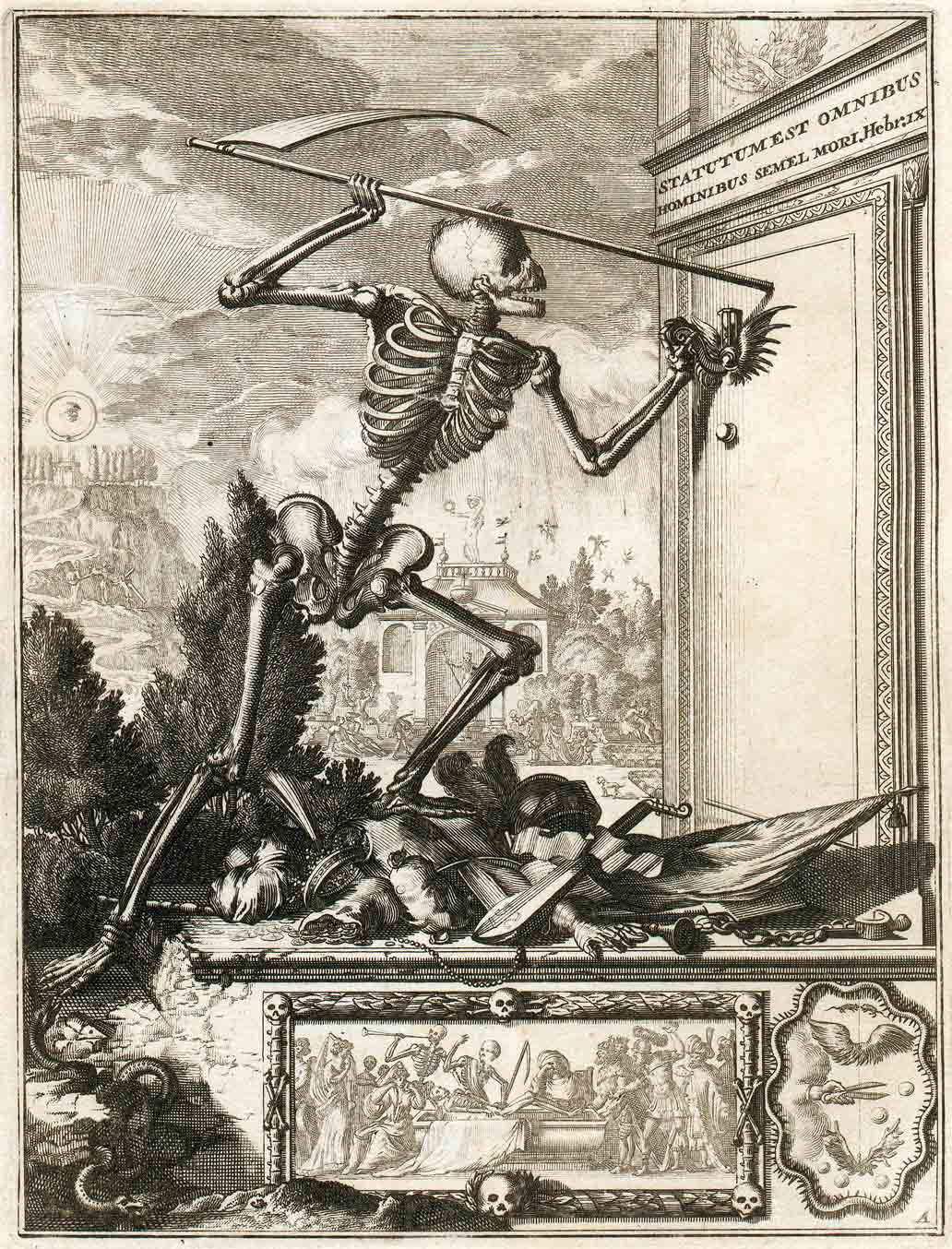
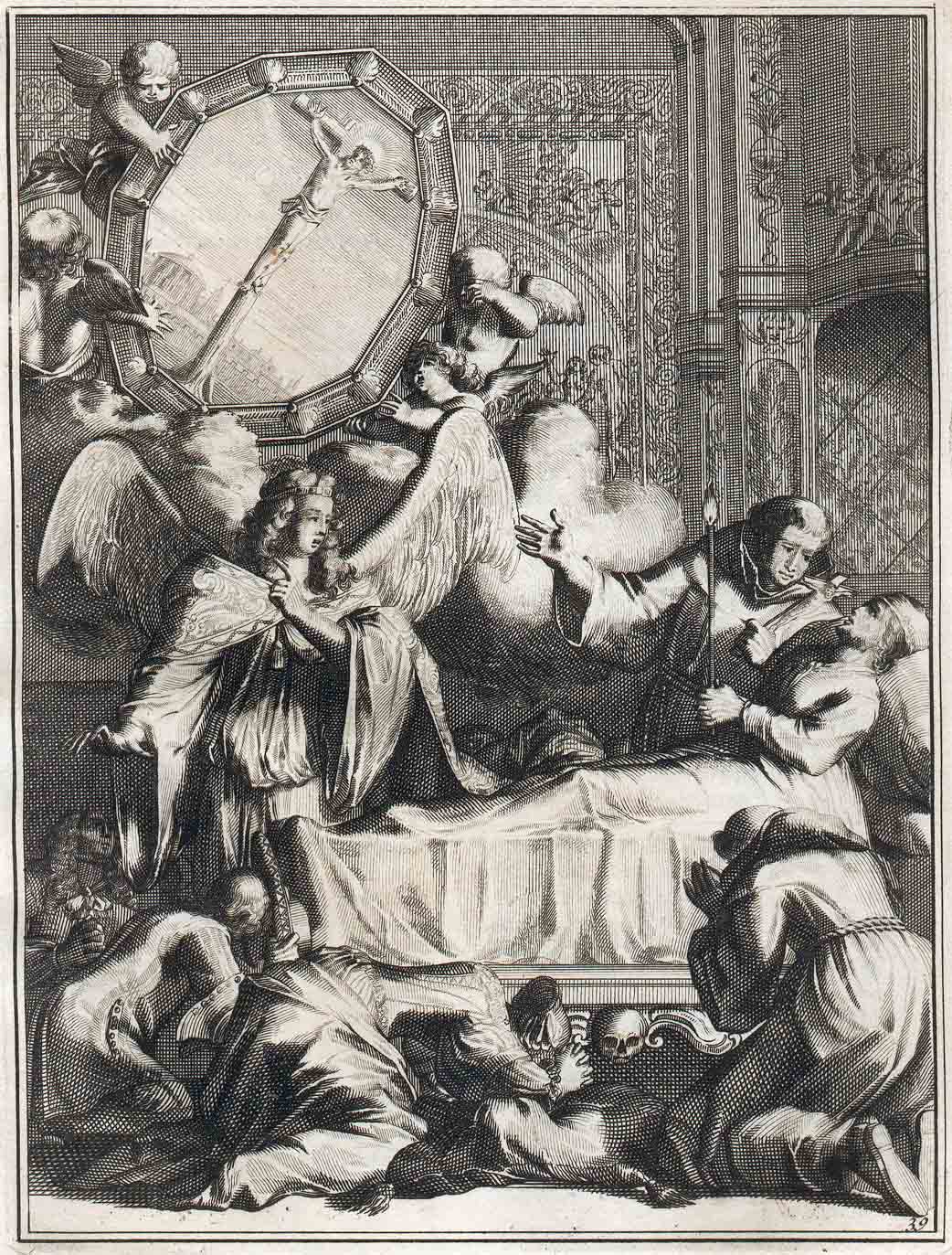
Se han escrito miles de páginas sobre la peculiar tendencia hispánica hacia lo macabro, la contemplación de la muerte, el sentimiento de fugacidad, el pesimismo y la melancolía. Es cierto en nuestro Barroco, y más aún en buena parte del Barroco andaluz. En nuestros trabajos hemos cubierto varias veces estos asuntos: desde la publicación de un Ars moriendi medieval (Zaragoza: Pablo Hurus, c. 1479-1484, pueden descargarse aquí sus grabados) y el excelente estudio sobre la melancolía barroca de Fernando R. de la Flor, Era melancólica. Figuras del imaginario barroco —ambos en la colección «Medio Maravedí»—, hasta la inclusión del espectacular Espejo de la Muerte de Carlos Bundeto (Amberes: Jorgio Gallet, 1700) en nuestro CD de Emblemas españoles: he aquí el primero y el último de sus 41 grabados.
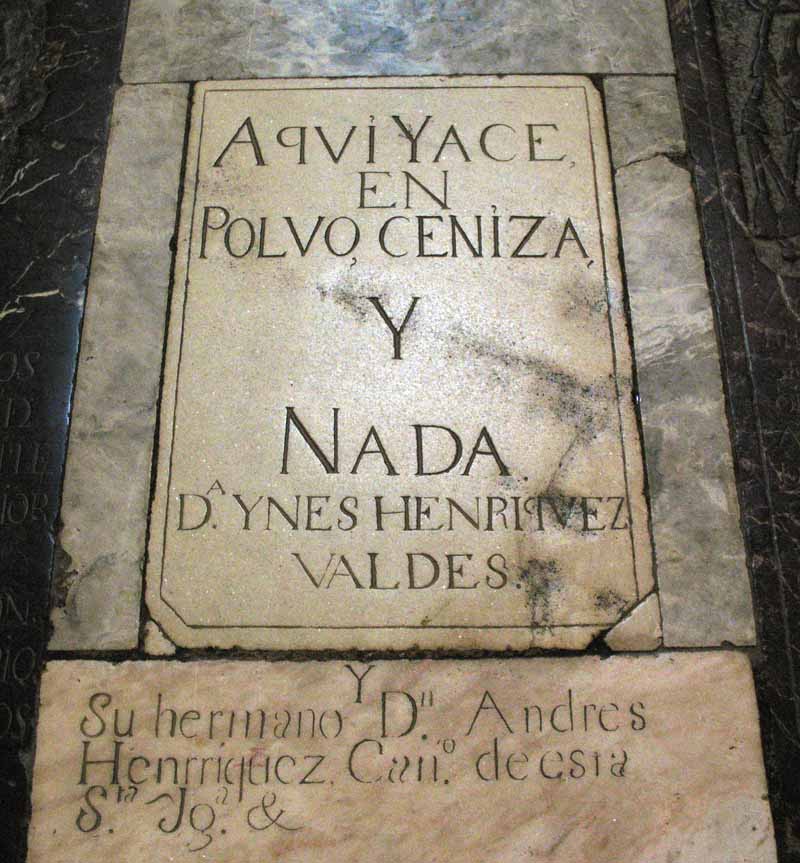
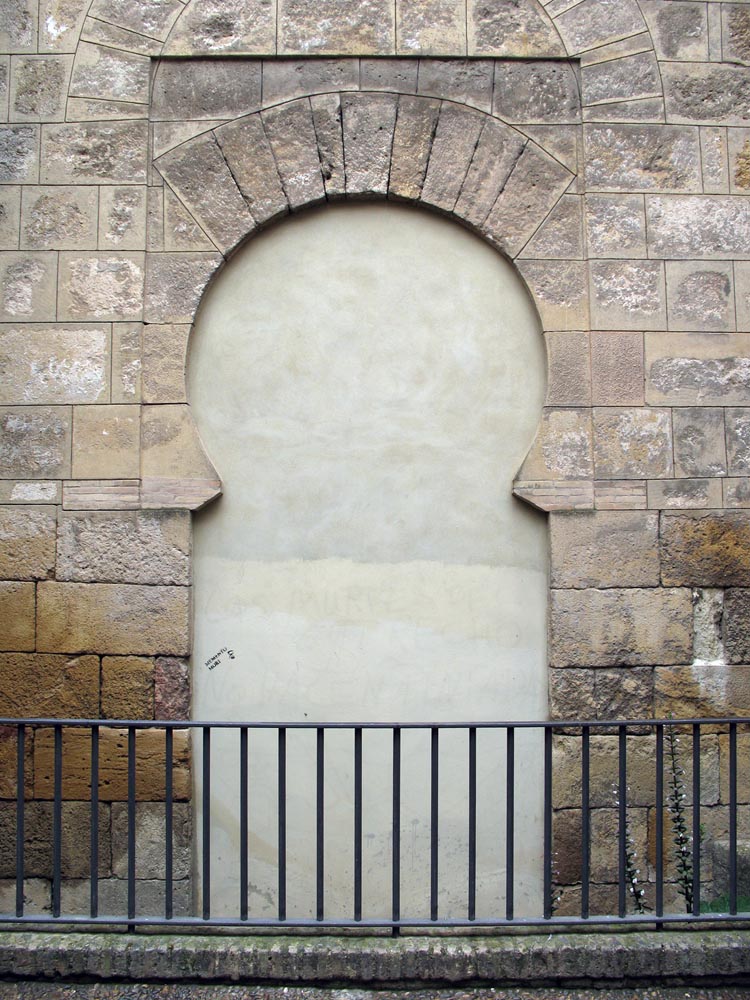
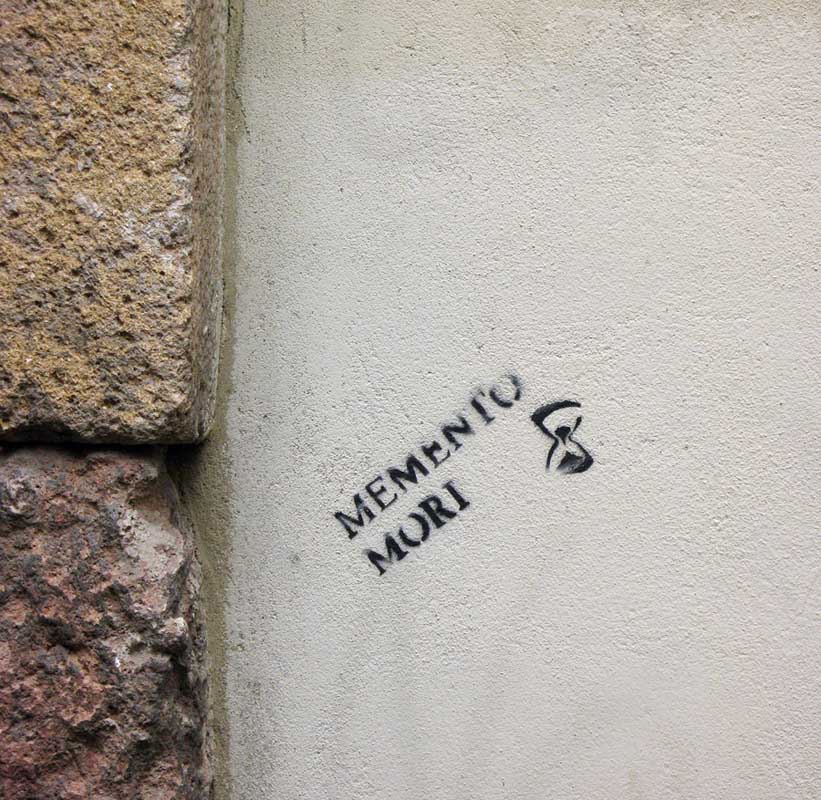
Viene al caso este recuerdo porque en una rápida visita a Córdoba y Sevilla el pasado fin de semana nos topamos con una última muestra sorprendente de este espíritu.
01 junio, 2007
Lexicografía, postguerra y cartas familiares
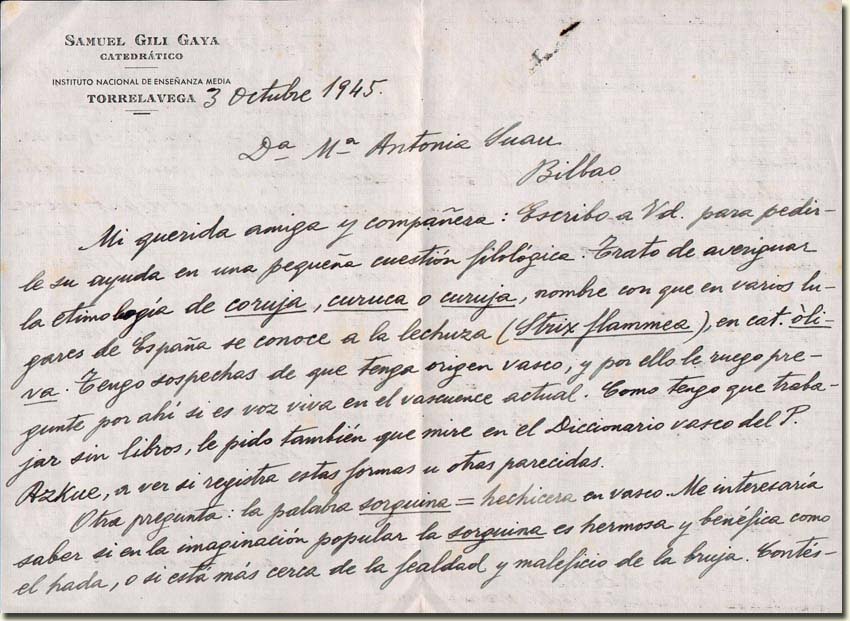
En 1943, Antonia Suau (mi abuela materna) obtuvo la cátedra de lengua y literatura españolas en el Instituto de Bilbao. En 1938, en plena Guerra Civil, a la vez había tenido una hija (mi madre), se había quedado viuda y había tenido que salir del Madrid asediado perdiendo definitivamente casi todo lo que había sido su vida hasta entonces. Recuperada de la depuración sufrida junto a tantos otros intelectuales que habían trabajado activamente en el proyecto pedagógico republicano, en aquel año oscuro de 1943 pudo estabilizar de nuevo —aunque siempre parcialmente— su vida. Uno de los pocos contactos que mantuvo después de la Guerra fue el de don Samuel Gili Gaya, también recluido en una especie de exilio interior. Con él había colaborado muy estrechamente como profesora del Instituto Escuela de Madrid («la más importante experiencia pedagógica de nuestro país en todos los tiempos», dirá él mismo años después) y en el Centro de Estudios Históricos, donde elaboró algunas papeletas para los glosarios de documentos de los siglos XI al XV que dirigía Américo Castro... Pero no se trata aquí de contar todo esto en detalle, sino solo de dar como pequeña curiosidad un autógrafo (obviamente inédito) de don Samuel.
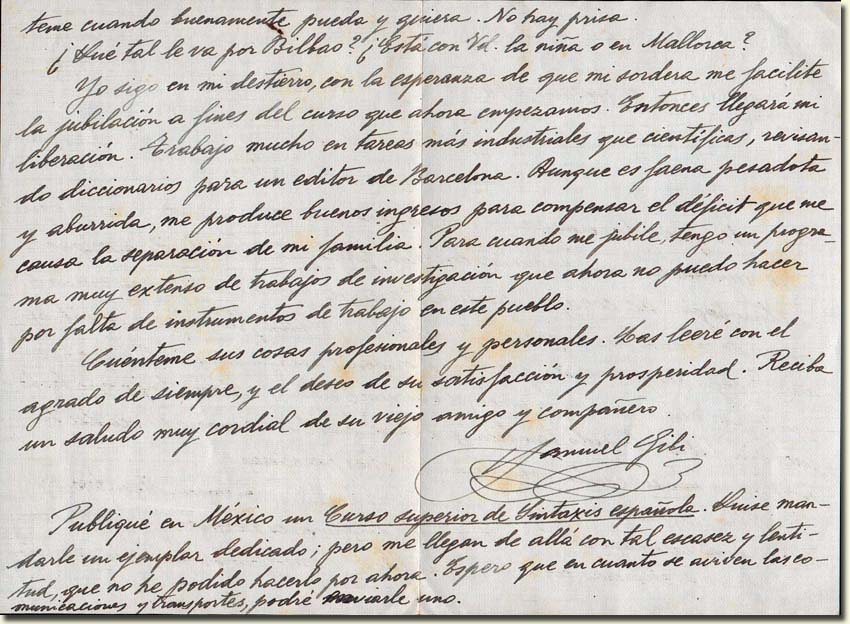
Es una de las cartas dirigidas a Antonia Suau desde Torrelavega, donde Gili Gaya fue catedrático hasta su jubilación. Ahora estamos en 1945. Su lectura es suficientemente explícita sobre las condiciones de vida, el ambiente y las aspiraciones de algunas personas cuyas carreras se hicieron tan difíciles en el primer franquismo. Él también había sido víctima del frenesí depurativo, acusado de cosas tan terribles como «catalanista» (y quizá sea ésta la razón de que las cartas todavía próximas al fin de la Guerra estén en castellano, y solo hacia los años 60 pasen a estar en catalán). Pero nunca, ni siquiera durante los años de guerra, dejó de trabajar y publicar acerca de sus grandes empeños. Uno de los más absorbentes era la lexicografía, y sobre ella va el núcleo de esta carta. En estas líneas, desde luego, hay más cosas. Nosotros, en Studiolum, solo queremos hoy rendir un muy modesto homenaje de agradecimiento: son figuras que nos sirven de estímulo cuando, en un mundo tan diferente como el de 2007, emprendemos algunas tareas conectadas con aquéllas.
SAMUEL GILI GAYA
Catedrático
Instituto Nacional de Enseñanza Media
TORRELAVEGA 3 octubre 1945
Dª Mª Antonia Suau
Bilbao
Mi querida amiga y compañera: Escribo a Vd. para pedirle su ayuda en una pequeña cuestión filológica. Trato de averiguar la etimología de coruja, curuca o curuja, nombre con que en varios lugares de España se conoce a la lechuza (Strix flammea), en cat. òliva. Tengo sospechas de que tenga origen vasco, y por ello le ruego pregunte por ahí si es voz viva en el vascuence actual. Como tengo que trabajar sin libros, le pido también que mire en el Diccionario vasco del P. Azkue, a ver si registra estas formas u otras parecidas.
Otra pregunta: la palabra sorguina = hechicera en vasco. Me interesaría saber si en la imaginación popular la sorguina es hermosa y benéfica como el hada, o si está más cerca de la fealdad y maleficio de la bruja. Contés-
teme cuando buenamente pueda y quiera. No hay prisa.
¿Qué tal le va por Bilbao? ¿Está con Vd. la niña o en Mallorca?
Yo sigo en mi destierro, con la esperanza de que mi sordera me facilite la jubilación a fines del curso que ahora empezamos. Entonces llegará mi liberación. Trabajo mucho en tareas más industriales que científicas, revisando diccionarios para un editor de Barcelona. Aunque es faena pesadota y aburrida, me produce buenos ingresos para compensar el déficit que me causa la separación de mi familia. Para cuando me jubile, tengo un programa muy extenso de trabajos de investigación que ahora no puedo hacer por falta de instrumentos de trabajo en este pueblo.
Cuénteme sus cosas profesionales y personales. Las leeré con el agrado de siempre, y el deseo de su satisfacción y prosperidad. Reciba un saludo muy cordial de su viejo amigo y compañero.
Samuel Gili
Publiqué en México un Curso superior de sintaxis española. Quise mandarle un ejemplar dedicado; pero me llegan de allá con tal escasez y lentitud, que no he podido hacerlo por ahora. Espero que en cuanto se aviven las comunicaciones y transportes, podré enviarle uno.
Suscribirse a:
Entradas (Atom)